

[vc_row el_class=”compact-box” css=”.vc_custom_1464251981091{padding-top: 60px !important;padding-bottom: 40px !important;}”][vc_column][vc_column_text css=”.vc_custom_1464253051347{padding-bottom: 30px !important;}”]
[/vc_column_text][vc_column_text]
Have regular family meals.
Serve a variety of healthy foods and snacks.
Be a role model by eating healthy yourself.
Avoid battles over food.
Involve kids in the process.
[/vc_column_text][/vc_column][/vc_row][vc_row css=”.vc_custom_1464257179429{padding-top: 40px !important;padding-bottom: 40px !important;background-color: #efefef !important;}”][vc_column][vc_column_text]
But it’s not easy to take these steps when everyone is juggling busy schedules and convenience food, such as fast food, is so readily available.
Here are some suggestions to help you incorporate all five strategies into your routine:
[/vc_column_text][/vc_column][/vc_row][vc_row el_class=”box-grey” css=”.vc_custom_1464257165799{padding-top: 40px !important;padding-bottom: 60px !important;}”][vc_column][vc_row_inner css=”.vc_custom_1464253352325{padding-top: 30px !important;}”][vc_column_inner width=”1/2″][dfd_heading style=”style_01″ title_font_options=”tag:h5″ subtitle_font_options=”tag:h3″]Family Meals[/dfd_heading][vc_column_text] Family meals are a comforting ritual for both parents and kids. Children like the predictability of family meals and parents get a chance to catch up with their kids. Kids who take part in regular family meals are also:
In addition, family meals offer the chance to introduce your child to new foods and find out which foods your child likes and which ones he or she doesn’t.
Teens may turn up their noses at the prospect of a family meal – not surprising because they’re trying to establish independence. Yet studies find that teens still want their parents’ advice and counsel, so use mealtime as a chance to reconnect. Also, consider trying these strategies:
What counts as a family meal? Any time you and your family eat together – whether it’s takeout food or a home-cooked meal with all the trimmings. Strive for nutritious food and a time when everyone can be there. This may mean eating dinner a little later to accommodate a child who’s at sports practice. It can also mean setting aside time on the weekends, such as Sunday brunch, when it may be more convenient to gather as a group.[/vc_column_text][/vc_column_inner][vc_column_inner width=”1/2″][dfd_heading style=”style_01″ title_font_options=”tag:h5″ subtitle_font_options=”tag:h3″]Stocking Up On Healthy Foods[/dfd_heading][vc_column_text]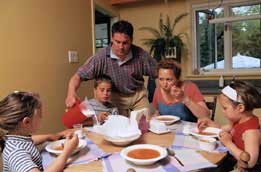 Kids, especially younger ones, will eat mostly what’s available at home. That’s why it’s important to control the supply lines – the foods that you serve for meals and have on hand for snacks. Follow these basic guidelines:
By drinking milk, kids also boost their intake of calcium, which is important for healthy bones. That means 800 milligrams (mg) a day for kids ages 6 to 8 and 1,300 mg a day after age 9. To reach the 1,300-mg goal, your child could have:
[/vc_column_text][/vc_column_inner][/vc_row_inner][/vc_column][/vc_row][vc_row el_class=”box-grey” sizing=”” css=”.vc_custom_1464257503160{padding-top: 40px !important;padding-bottom: 40px !important;background-color: #efefef !important;}” heading=”” effects=”” extra_features=”” bg_main=”” bg_overlay=””][vc_column width=”1/2″][dfd_heading style=”style_01″ title_font_options=”tag:h5″ subtitle_font_options=”tag:h3″]How To Be A Role Model
[/dfd_heading][vc_column_text]The best way for you to encourage healthy eating is to eat well yourself. Kids will follow the lead of the adults they see every day. By eating fruits and vegetables and not overindulging in the less nutritious stuff, you’ll be sending the right message.
Another way you can be a good role model is by limiting portions and not overeating. Talk about your feelings of fullness, especially with younger children. You might say, “This is delicious, but I’m full, so I’m going to stop eating.” At the same time, parents who are always dieting or complaining about their bodies may foster these same negative feelings in children. Try to keep a positive approach when it comes to food.[/vc_column_text][vc_row_inner el_class=”compact-box”][vc_column_inner][/vc_column_inner][/vc_row_inner][/vc_column][vc_column width=”1/2″][dfd_heading style=”style_01″ title_font_options=”tag:h5″ subtitle_font_options=”tag:h3″]Don’t Battle Over Food[/dfd_heading][vc_column_text]It’s easy for food to become a source of conflict. Well-intentioned parents might find themselves bargaining or bribing kids so they eat the healthy food in front of them. A better strategy is to give kids some control, but to also limit the kind of foods available at home.
Kids should decide if they’re hungry, what they will eat from the foods served, and when they’re full. Parents control which foods are available to the child, both at mealtime and between meals. Here are some guidelines to follow:
[/vc_column_text][/vc_column][/vc_row][vc_row el_class=”box-grey” sizing=”” css=”.vc_custom_1464257518727{padding-top: 40px !important;padding-bottom: 60px !important;}” heading=”” effects=”” extra_features=”” bg_main=”” bg_overlay=””][vc_column][dfd_heading style=”style_01″ title_font_options=”tag:h5″ subtitle_font_options=”tag:h3″]Get Kids Involved[/dfd_heading][vc_row_inner][vc_column_inner width=”1/2″][vc_column_text]Most kids will enjoy making the decision about what to make for dinner. Talk to them about making choices and planning a balanced meal. Some children may even want to help shop for ingredients and prepare the meal. At the store, help your child look at food labels to begin understanding nutritional values.
In the kitchen, select age-appropriate tasks so your child can play a part without getting injured or feeling overwhelmed. And at the end of the meal, don’t forget to praise the chef.[/vc_column_text][/vc_column_inner][vc_column_inner width=”1/2″][vc_column_text]School lunches can be another learning lesson for kids. More importantly, if you can get them thinking about what they eat for lunch, you may be able to help them make positive changes. A good place to start may be at the grocery store, where you can shop together for healthy, packable foods.
There’s another important reason why kids should be involved: It can help prepare them to make good decisions on their own about the foods they want to eat. That’s not to say that your child will suddenly want a salad instead of french fries, but the mealtime habits you help create now can lead to a lifetime of healthier choices.[/vc_column_text][/vc_column_inner][/vc_row_inner][/vc_column][/vc_row]